Lassa fever: Nigeria enters peak season with deaths already up on last year
Nigeria recorded 268 Lassa fever deaths and 1,138 confirmed cases in the first 40 weeks of 2026, both higher than in 2025. Cases usually rise from November to April, so early detection and hospital infection control matter now.
Nigeria is entering the season when Lassa fever cases usually climb. The Nigeria Centre for Disease Control and Prevention (NCDC) has warned that infections tend to rise during the dry season, especially between November and April, and this year's figures are already worse than last year's.
The numbers so far
NCDC's situation report for epidemiological week 40 (to early October), reported by Anadolu Agency, showed:
- 1,138 confirmed cases in 2026, up from 924 in the same period of 2025.
- 268 deaths, up from 172, giving a case fatality rate of 23.6% (18.6% a year earlier).
- 8,414 suspected cases, compared with 8,041 in 2025.
- Cases in 24 states and 119 local government areas.
- 88% of confirmed cases came from five states: Ondo (36%), Bauchi (23%), Taraba (12%), Edo (11%) and Benue (6%).
NCDC attributed the high death rate partly to late presentation at health facilities, high treatment costs and poor health-seeking behaviour. These are the most recent cumulative figures we could verify; NCDC has published later weekly reports, which may update the totals.
Why early detection decides outcomes
Lassa fever is spread mainly through contact with food or household items contaminated by infected rodents. It can also pass from person to person through body fluids, particularly in health facilities without adequate infection-prevention measures. Its early symptoms, fever, weakness and headache, look like malaria and many other illnesses. That is the core difficulty: by the time Lassa is suspected, a patient may have been in a ward for days.
Hospitals can prepare now, before the peak:
- Make "not malaria" a question. When a fever does not respond to antimalarial treatment, or a malaria test is negative, the record should prompt clinicians to consider Lassa, especially in high-burden states.
- Use standard precautions for every febrile patient. Gloves, hand hygiene and safe handling of samples and body fluids protect staff before a diagnosis is made.
- Track samples and results closely. A laboratory system that shows when a Lassa sample was sent, where it is and when the result is back avoids delays that cost lives.
- Report suspected cases at once through the national surveillance system, so that contacts can be followed up quickly.
NCDC advises the public to keep homes clean, store food in covered containers, dispose of waste properly to keep rodents away, and seek medical care promptly for fever, weakness or headache.
Source: Anadolu Agency, 13 October 2026, citing the NCDC week 40 situation report. Check the NCDC situation reports for the latest figures.
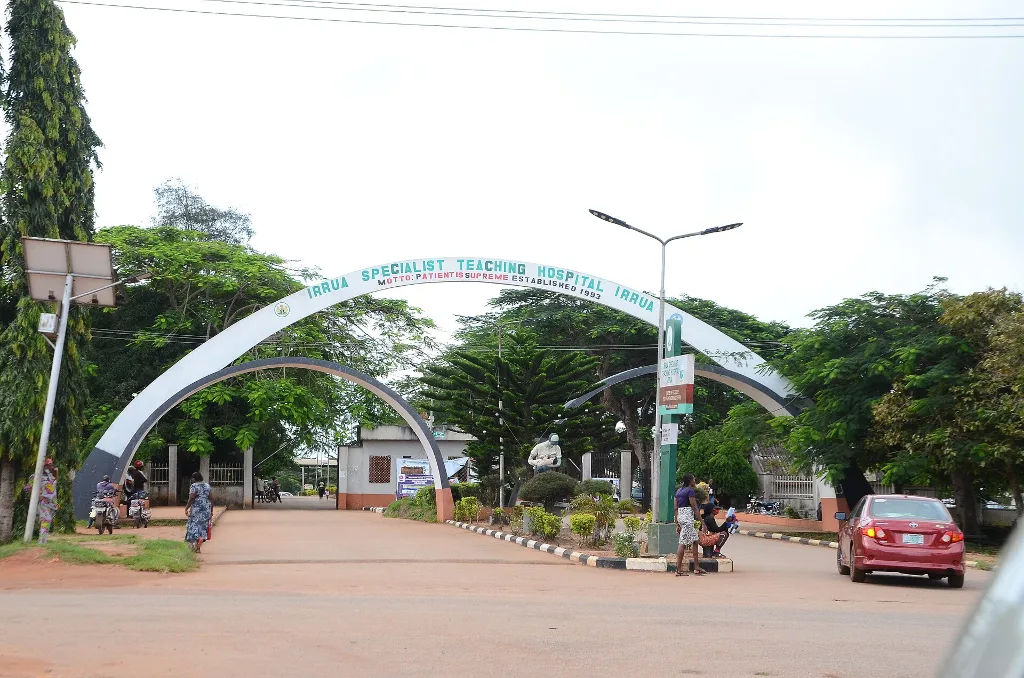
Photo: The entrance to Irrua Specialist Teaching Hospital in Edo State, Nigeria. Nogheghase7, CC BY-SA 4.0, via Wikimedia Commons.