Nigeria's diphtheria outbreak: why vaccination records are part of the response
Nigeria has confirmed more than 28,000 diphtheria cases and 1,126 deaths, with most affected children not fully vaccinated. Antitoxin is scarce, which makes prevention and accurate immunisation records more important.
Nigeria's diphtheria outbreak continues to grow. As of 7 November 2026, the country had recorded 37,529 suspected cases, 28,151 confirmed cases and 1,126 deaths across 26 states and the Federal Capital Territory, Premium Times reported. Kano State alone accounts for 12,008 confirmed cases.
Antitoxin is running short
Médecins Sans Frontières (MSF), which treats patients in Katsina and Zamfara States, has warned that supplies of diphtheria antitoxin (DAT), the treatment for severe cases, are dangerously low. According to the report, only about 25,000 of the 90,000 doses needed have been supplied. DAT is made by few manufacturers worldwide, so shortages cannot be fixed quickly.
With treatment scarce, prevention matters even more. About 93% of affected children were not fully vaccinated.
Why records are part of the response
Diphtheria is preventable with routine childhood vaccines given in a series of doses. An outbreak in which most cases are in under-vaccinated children points to two questions every health facility should be able to answer quickly:
- Which children in our area have missed doses? A register that calculates due and overdue doses from each child's date of birth and the national schedule makes catch-up visible, instead of relying on families to remember.
- Has this child actually been vaccinated? When a dose is recorded only on a paper card, a lost card means a lost history. A facility record of each dose, with vaccine, batch and date, lets staff check status at any visit.
Surveillance depends on the same discipline. Suspected cases need to be recorded with dates, location and vaccination status so that outbreak teams can see where transmission is happening and where to send vaccines and antitoxin.
What facilities can do now
- Check the vaccination status of every child seen, not only at immunisation clinics.
- Use every contact, including outpatient visits, admissions and antenatal care for mothers with young children, to catch up missed doses.
- Report suspected diphtheria promptly through the national surveillance system.
- Keep vaccine stock records accurate, with batch and expiry dates, so that supplies reach the areas that need them.
Antitoxin can save the sickest patients. Vaccination, backed by accurate records, keeps children from needing it.
Source: Premium Times, reporting Nigeria Centre for Disease Control and MSF figures, November 2026. Figures change as the outbreak evolves; check the NCDC for the latest situation reports.
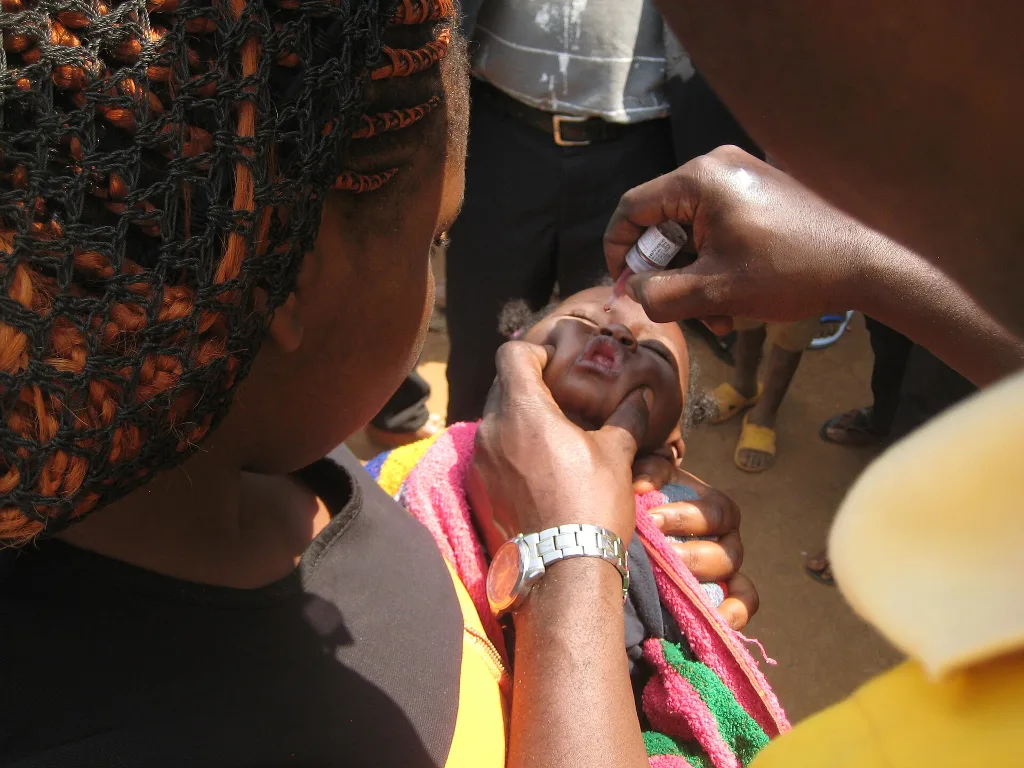
Photo: A young child receives a dose of oral polio vaccine during a vaccination campaign. CDC Global, CC BY 2.0, via Wikimedia Commons.