Maternal health in Africa: where better records can make care safer
Sub-Saharan Africa accounts for around 70% of the world's maternal deaths, and most could be prevented. Good clinical records will not solve that alone, but they help make sure risks are seen and followed up from the first antenatal contact to postnatal care.
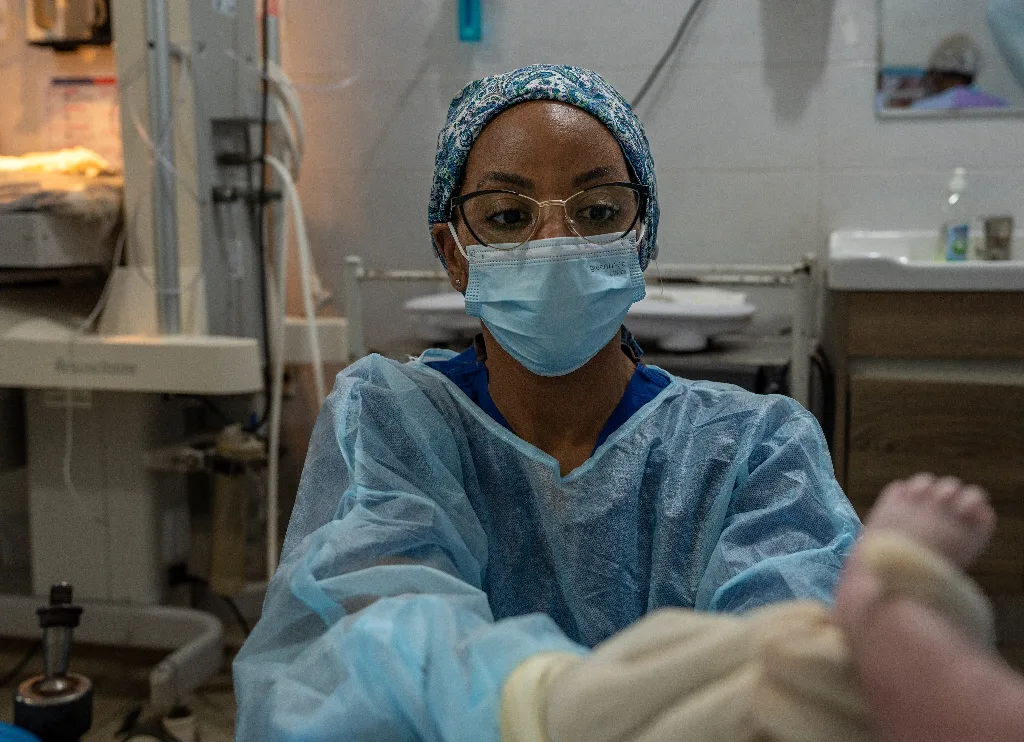
Every maternal death is a family, and a community, losing a mother. The figures for Africa remain hard to read. According to the World Health Organization's maternal mortality fact sheet, sub-Saharan Africa alone accounted for around 70% of the world's maternal deaths in 2023, and most maternal deaths could have been prevented. The same source notes real progress: the region reduced its maternal mortality ratio by about 40% between 2000 and 2023.
Preventing maternal deaths depends above all on skilled health workers, emergency obstetric care, medicines, blood, transport and referral systems. Records are not a substitute for any of these. But poor records quietly undermine them: a risk noted at one visit is not seen at the next, a referral letter is lost, or the labour ward does not know what the antenatal clinic knew. This article looks at where a well-designed maternity record can help.
Antenatal care is a series of contacts, not a single visit
WHO's antenatal care guidelines recommend a minimum of eight contacts during pregnancy. Each contact builds on the last: dating, blood pressure, investigations, risk factors and the plan for birth. On paper, that history is spread across cards, registers and notes that can be lost or left at home.
A digital pregnancy record keeps those contacts together, so that whoever sees the woman next can see what was found before, what was ordered and what is still outstanding.
Where information most often gets lost
- Between antenatal contacts. Missed appointments are not followed up because nobody can easily see who is overdue.
- Between the clinic and the labour ward. Risk factors identified in pregnancy are not visible when the woman arrives in labour, sometimes at night and sometimes at a different facility.
- At delivery. Outcomes for each baby, especially in twin births, are recorded inconsistently, and the newborn's own record is not linked to the mother's.
- After birth. Postnatal care is the part of the journey most often cut short, even though complications can arise in the days and weeks after delivery.
What a good maternity record should do
Based on our work on the maternity module of Syneom EHR, these are the features we think matter most:
- One pregnancy record from registration to closure, with dating recorded once and each antenatal contact recorded as its own visit.
- A risk history that builds up over the pregnancy and is visible at every later contact, in triage and in the labour ward.
- Appointments and a follow-up list, so staff can see who is due and who has missed a contact.
- Obstetric triage and admission through the hospital's normal admission process, so the woman's whole history travels with her to the ward.
- Labour, delivery and per-baby outcomes, with each newborn linked to a patient record of their own.
- Postnatal care and explicit closure, so a pregnancy does not simply disappear from view after delivery.
- Registers and reports drawn from the same records, instead of being copied by hand at the end of the month.
Clinical rules belong to clinicians
Software can highlight a blood pressure that needs attention, but which values should trigger a warning is a clinical decision that differs between settings and changes with guidance. In Syneom EHR, clinical thresholds in maternity are facility configuration: none are switched on by default, and each facility's clinical leadership decides what to use. We think that is the right approach for any maternity system.
Privacy and trust
Pregnancy records are among the most sensitive information a hospital holds. Access should be limited by role, every access to a restricted record should be logged, and messages to patients, such as appointment reminders, should be sent only with the woman's consent. Data protection is not only a legal requirement under the Nigeria Data Protection Act 2023; it is part of why women trust a facility enough to come back.
Records do not deliver babies. But when every contact, risk and outcome is in one place, the people who do are better placed to act in time.
If you run maternity services and would like to see how this works in practice, you can request a demonstration of Syneom EHR.
Photo: A nurse midwife caring for a newborn in a maternity ward in Ghana. U.S. Army photo by 1st Lt. Katherine Sibilla, public domain, via Wikimedia Commons.